Local Presence Makes for Timely Pine Harvest on the Community Forest
By: Jay McLaughlin, Executive Director
Our beloved ponderosa pine stands have been taking a beating in recent years—between bark beetles and pathogenic fungi, the ongoing stretch of below-normal precipitation has many areas set up for wide-spread mortality. As a result, from the Gorge up the White Salmon River Valley, and east through Glenwood, Goldendale and to Bickleton, our forested hills have a startling number of red and grey (dead) trees.
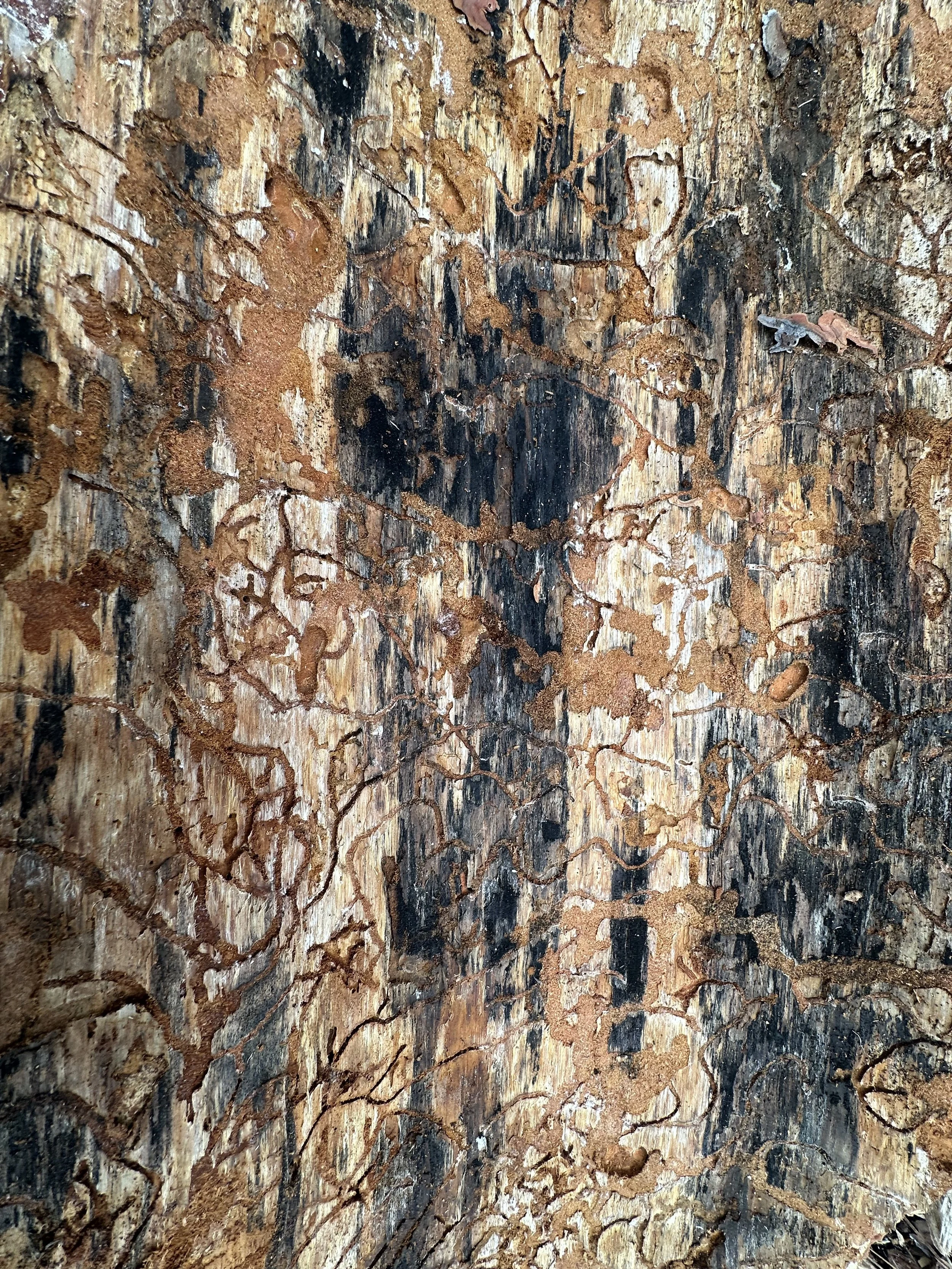
Beetle galleries under the bark of a ponderosa pine on the Community Forest. Image credit: Jay McLaughlin
By the time a ponderosa has turned red, western pine beetles—one of the major bark beetle culprits—are long gone; their larval broods having fed on the tree’s life giving tissues, matured and emerged to search for their next victim. MARS has invested heavily in promoting healthy pine stands on the Pine Flats Tract of the Mt. Adams Community Forest, southwest of Glenwood, through thinning and prescribed burning. As local managers, we have the benefit of driving, walking and assessing stands on the Mt. Adams Community Forest with a frequency and consistency that is unique for forest management today. In spite of our work, community forest lands have not been as immune to the “bugs and crud” as we had hoped and we noted a recent increase in the tell-tale signs of trees that were stressed and being attacked by beetles.
The next challenge? Markets. Over the past couple of years, selling a ponderosa pine log has been nearly impossible in our region. Could we salvage the value of many of these trees that were dead, dying or likely to die in the the coming year or two? Fortunately, toward the end of 2025 we had our first good market news. The SDS Mill in Bingen, now owned by WKO High Cascade, was finally purchasing pine logs on the open market. Even better, their market allowed for “blue stained” pine - a “discoloration” found in pine logs that have been invaded by bark beetles that some pine markets have historically rejected.
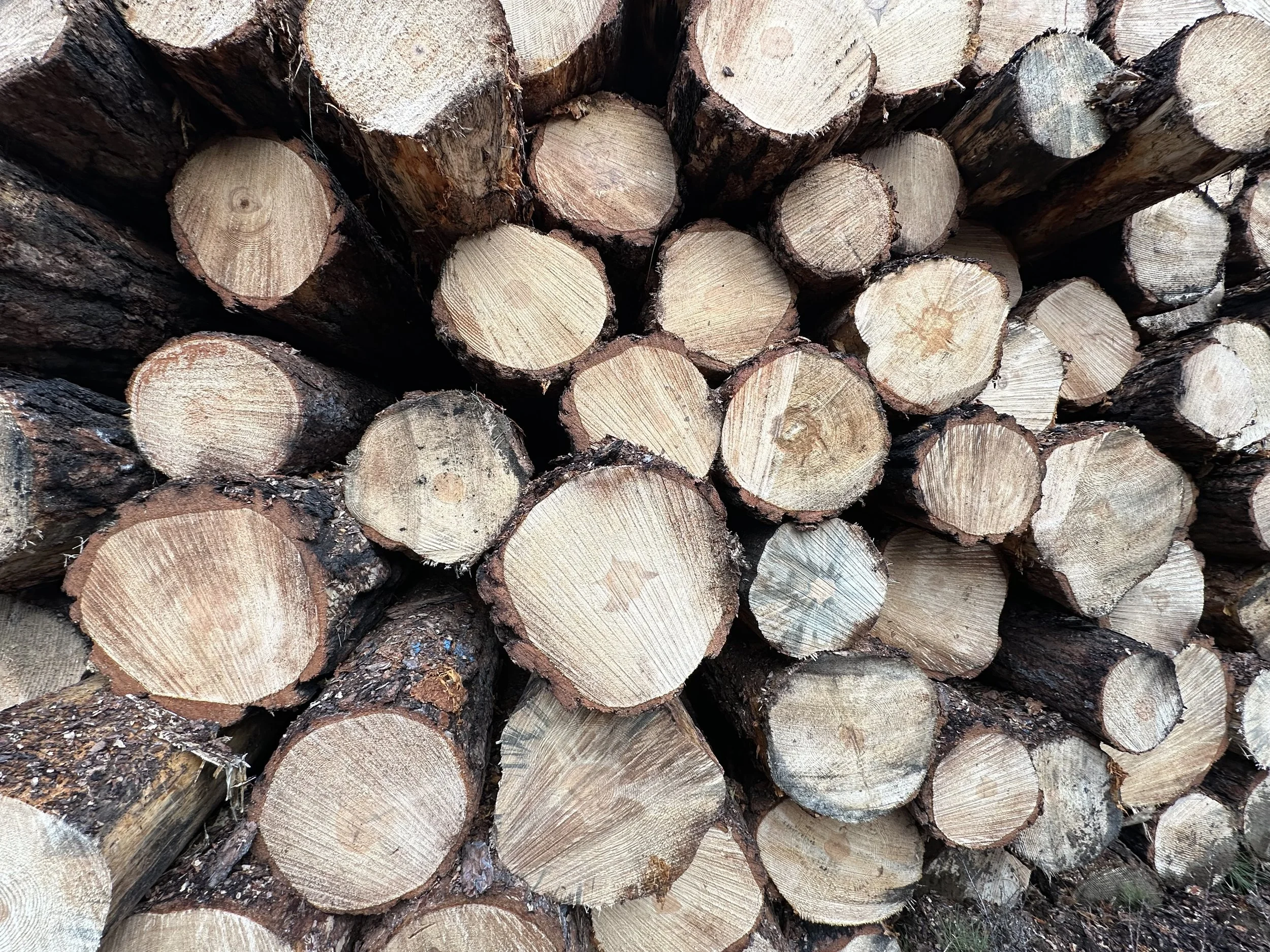
Pine logs harvested from the Community Forest, ultimately trucked to the Bingen SDS Mill. Image credit: Jay McLaughlin
We promptly connected with local logging contractors and by late January we had selected Glenwood-based Arnold Timber Cutting owned by Casey Arnold. Trees were marked for cutting, skid trails were designated, and we were off to the races. Over the past four weeks, 74 loads of pine logs were delivered to the mill thanks to the excellent work by Casey and his crew, as well as trucking provided by Mike Emerson and John Bartowski. The total harvest generated nearly 300,000 board feet of logs containing enough lumber to build approximately 20 average homes in the US.*
The harvest netted just under $50,000 for MARS, which we are applying to a loan we took out in 2023 when we purchased former Weyerhaeuser lands for the community forest along the BZ-Glenwood Hwy. Even better, these stands are—at least for now—that much greener and hopefully have a little more space, water and resources to fend off the continued onslaught of beetles!
*Homes in the US are typically built using various species and it would be almost unheard of for a home to be built entirely of pine. But pine can be used for multiple applications in construction and finish work. Pine logs from this harvest are being milled into studs.
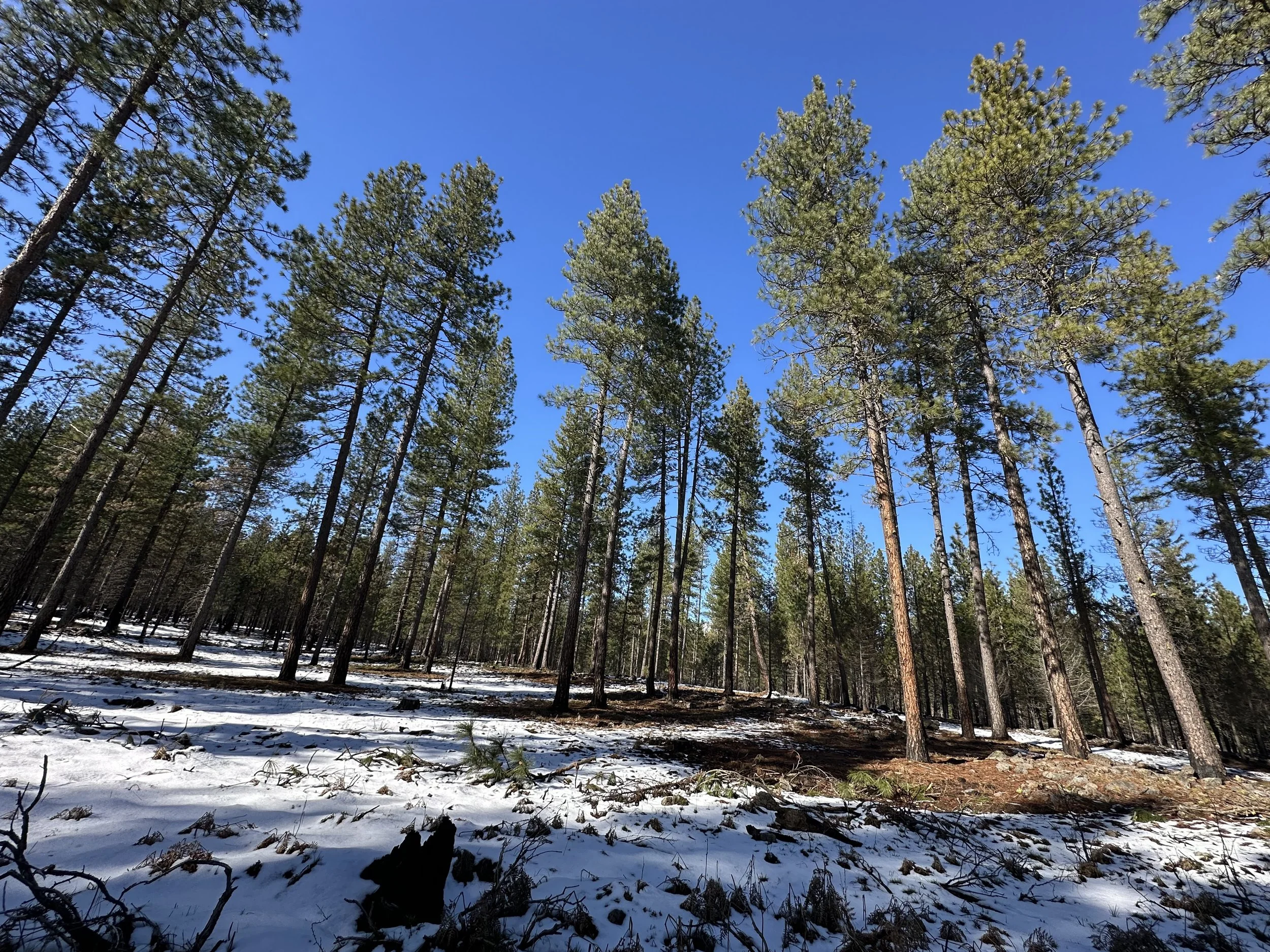
Mt. Adams Community Forest pine stands after the salvage and sanitation harvest. Image credit: Jay McLaughlin