What Lies Beneath: Adventures in the Root Zone of Glenwood’s Forests
By: Dave Ryan, Monitoring Coordinator
“Is this good goo?” is a common question as we blindly reach elbow or shoulder deep under the forest floor and wrap our hands around the cold, slimy material of decaying root systems in the forests of Glenwood, WA. We are looking for signs of Heterobasidion root disease (HRD), formerly known as annosum root rot. It takes a unique sort of person who can look at thousands of stumps and snags as if each one was their birthday and the HRD conks or mushy decay as the best presents ever. MARS is fortunate to have a crew of such people. As scientists, we know that we need to be unbiased in our assessments. However, we do get satisfaction when we grab hold of the stringy, yellow, damp wood, and we are excited to find the distinctive conk that is indicative of HRD. Finding these signs is verification that we are doing our due diligence and doing good work for the forests and surrounding community.
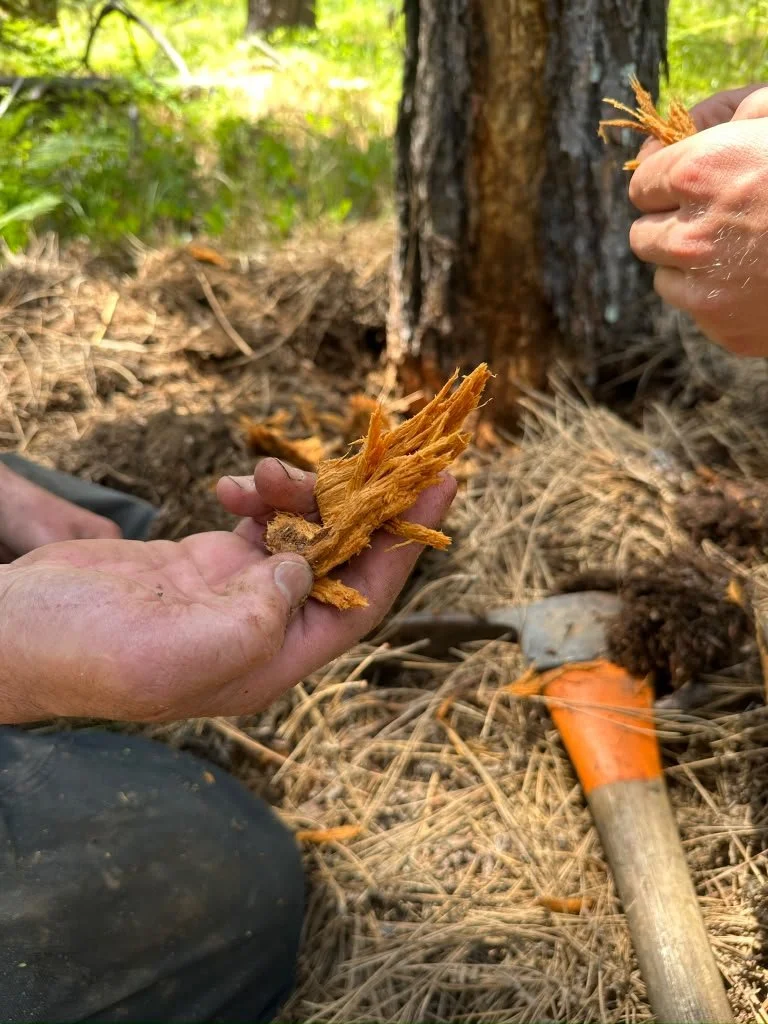
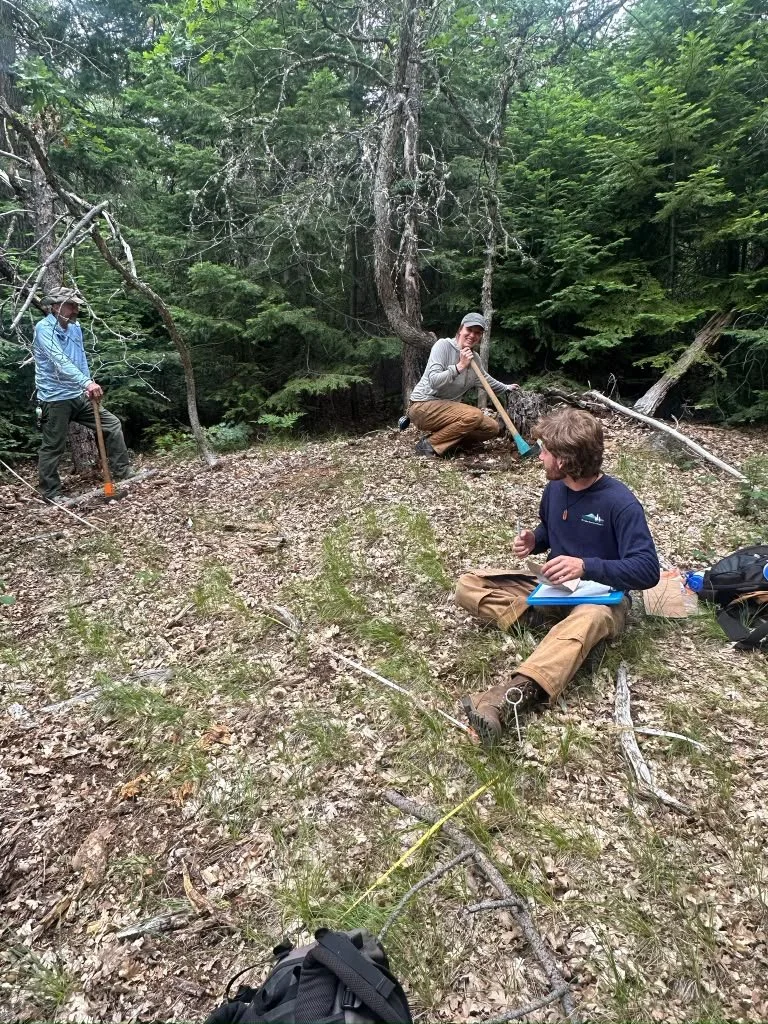
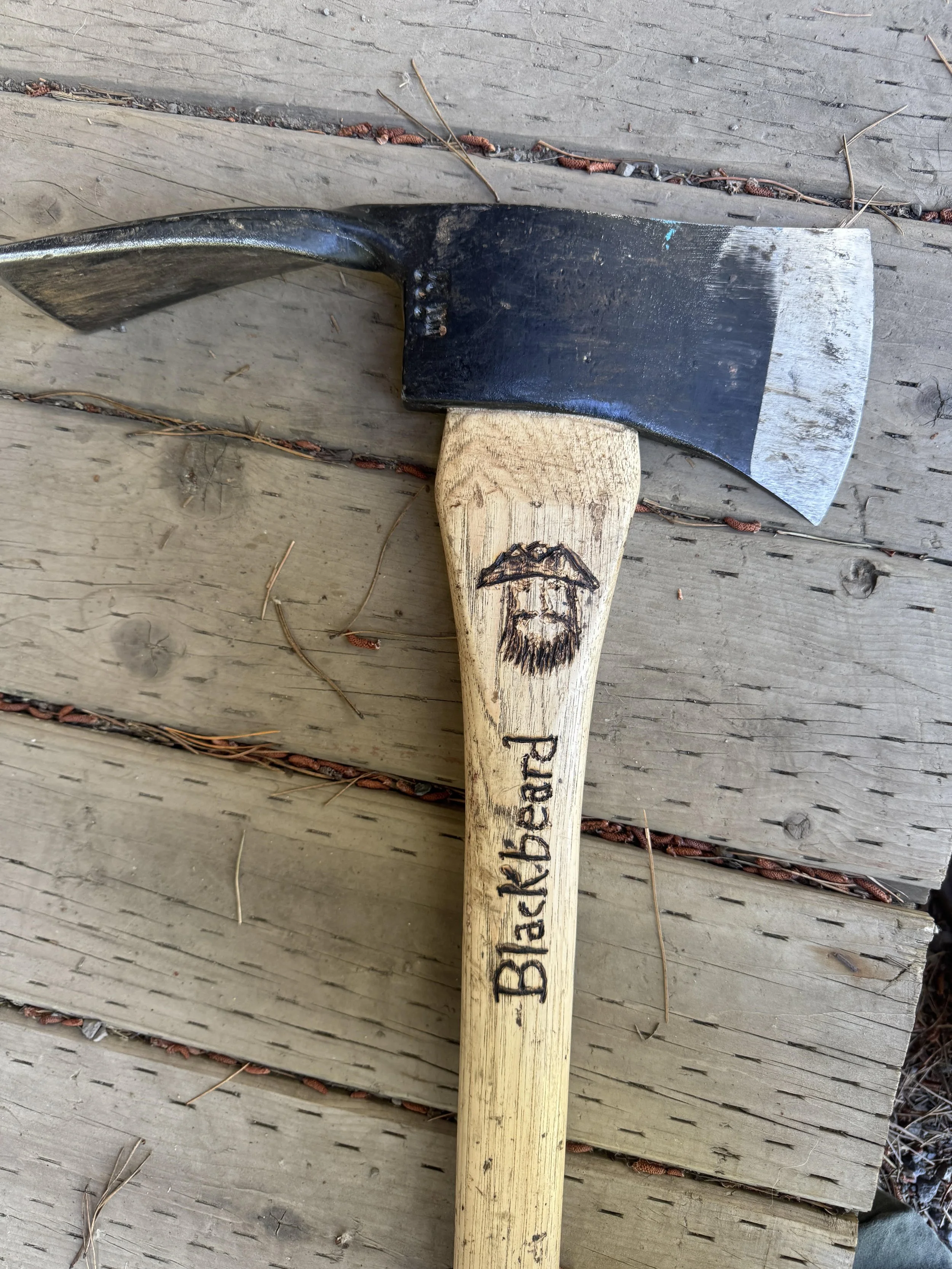
We are working with WA DNR forest pathologists to understand the scope and scale of HRD in the area. Our partner pathologists recently developed a monitoring protocol specific to root disease. Along with WA DNR and Oregon State University (OSU), we are part of this pilot project. Over the course of the spring and early summer, we installed over 350 plots across 2900 acres. Using pulaskis with colorful names such as T-bone, Aphrodite, Blackbeard, and Flesh-eater, we bust into stumps and snags to examine the roots in the belly of the earth beneath the forests. Two strains of HRD are known in North America, H. irregulare and H. occidentale. We are looking for the one that mostly impacts pine trees, H. irregulare. We bag and label the wood and fungal samples, which are then shipped to the botany lab at OSU for genetic testing to confirm or disconfirm the presence and species of root rot. For those of us with forest ecology on the brain, this is super fun work.
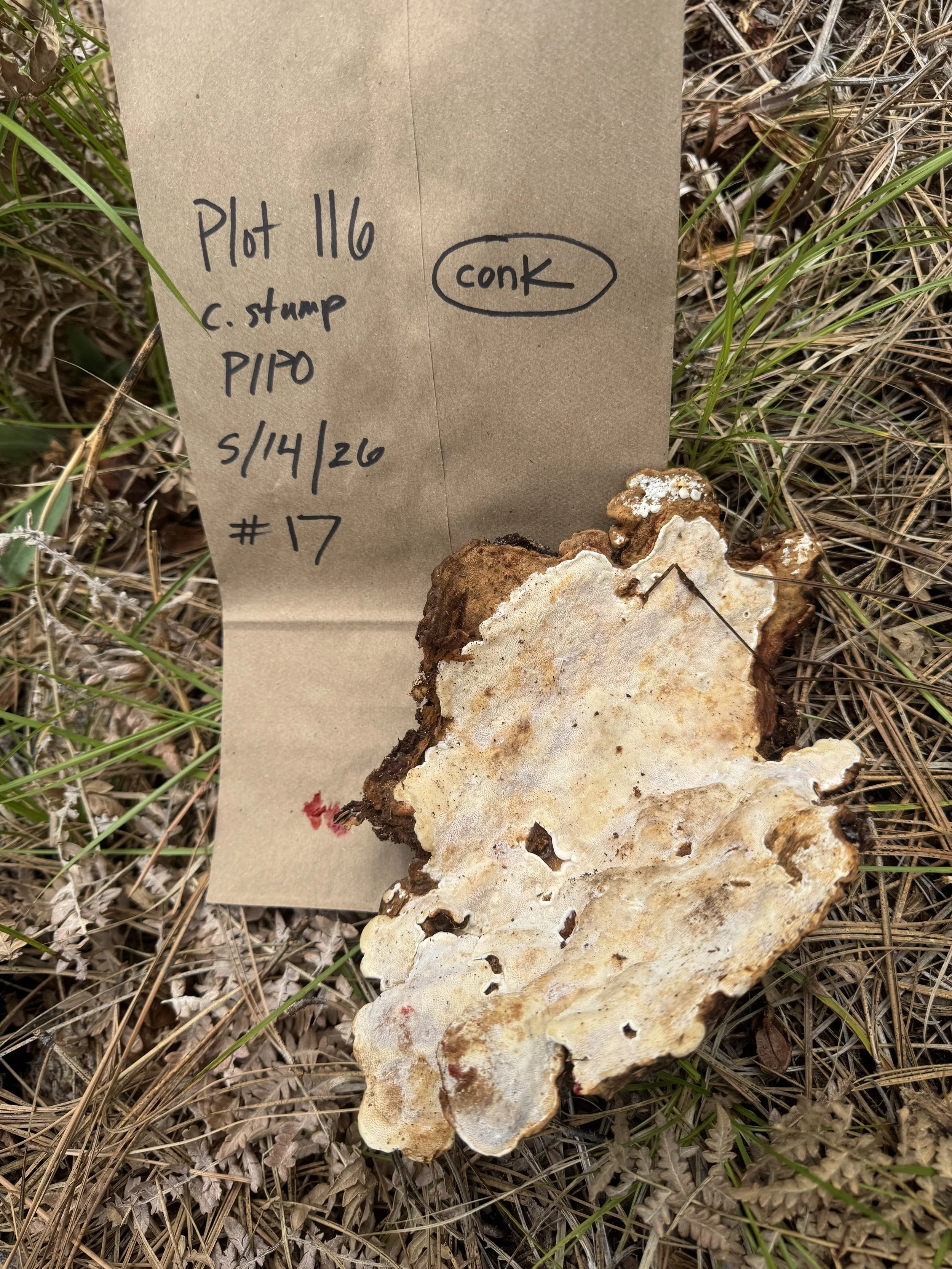
Historically, forest research in the region has focused on Armillaria root disease (ARD) as a cause of concern for natural resource managers; and the widespread presence of ARD in Glenwood is well documented (see this OPB video for more on Armillaria in the region). In recent years, managers across the country have identified Heterobasidion as a forest health concern because infected trees exhibit foliar decline, reduced height and diameter growth, and mortality. HRD spreads most effectively when airborne spores from the fruiting body land and germinate on freshly cut stumps. Once a root system is infected, HRD can spread via root-to-root contact.
This study revealed Heterobasidion presence throughout the survey area, which was often co-present with Armillaria. This initial survey was primarily to determine presence or absence. Further studies are required to determine the scale, severity, interactions or compounding effects with other pathogens, and what, if any, strategies are needed for mitigation. MARS is excited to be working with the WA DNR Forest Resilience Division on this issue, and we hope to see more studies like it to help foster healthy forests and healthy communities.
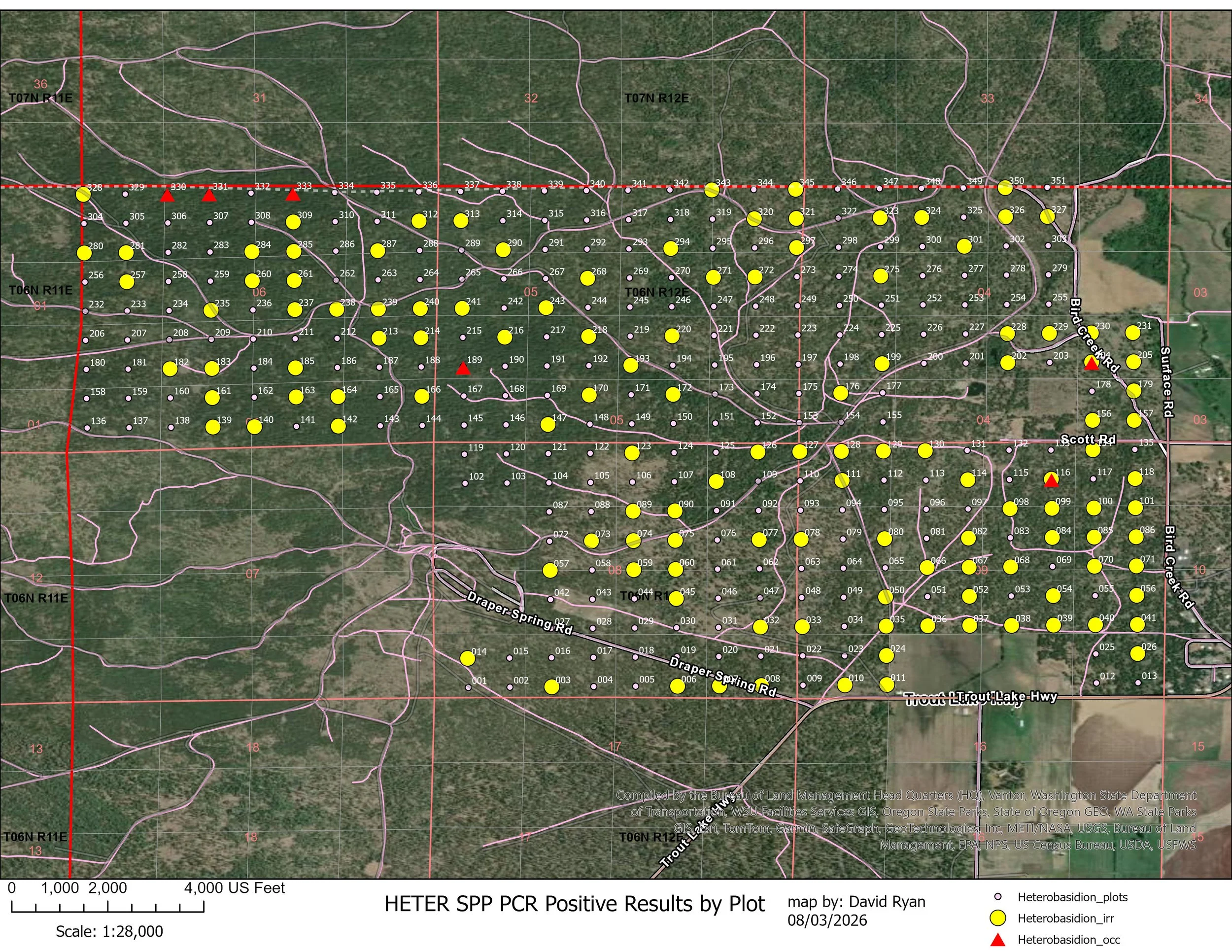
Positive Results by Plot. Image: Dave Ryan
References
https://dnr.wisconsin.gov/topic/foresthealth/annosumrootrot
Ohno, K., Myers, L. J., Smith, D. R., Clausen, C. A., Mausel, D., & Stanosz, G. R. (2017). Conifer species influence heterobasidion irregulare sporulation on stem discs exposed to natural inoculum and root wood decay in soil‐block tests. Forest Pathology, 48(1). https://doi.org/10.1111/efp.12381
Hu, Y., Elfstrand, M., Stenlid, J. et al. The conifer root rot pathogens Heterobasidion irregulare and Heterobasidion occidentale employ different strategies to infect Norway spruce. Sci Rep10, 5884 (2020). https://doi.org/10.1038/s41598-020-62521-x
